


Café Barriers




Recently Viewed
UK's Trusted Display and Signage Supplier · Since 1978
Café Barriers:
Define Your Outdoor Seating Area
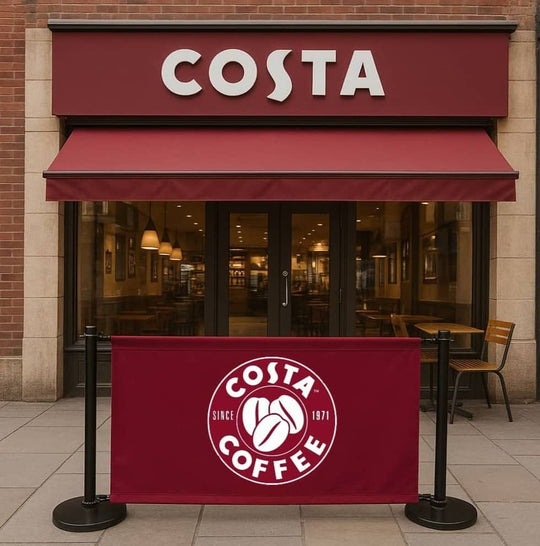
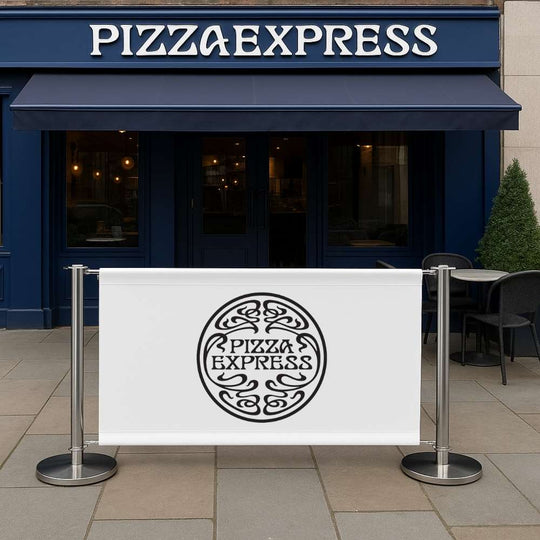
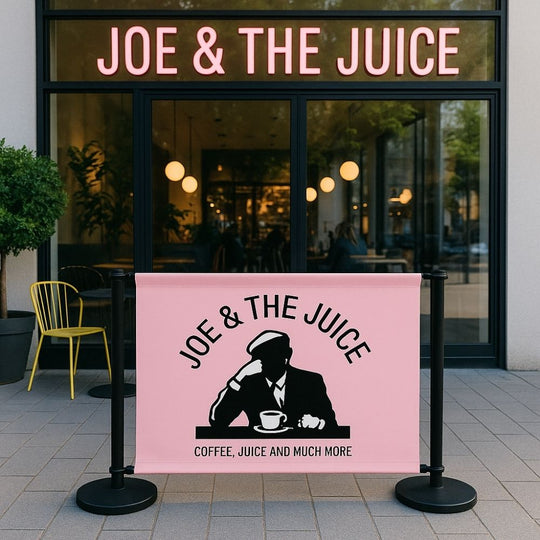
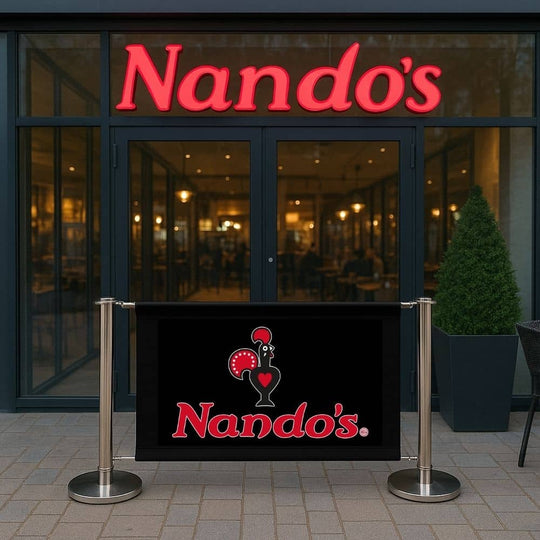
Café barriers are modular post-and-banner systems that define outdoor seating areas for restaurants, pubs, and coffee shops. Stainless steel or powder-coated black posts with 10 to 18kg weighted bases for wind stability. Cross-beam connections clip without tools for daily staff setup and takedown. Banner materials: PVC (wipe-clean, vibrant print), canvas, and mesh (textured, partial airflow for premium aesthetic). Custom printing single or double-sided. Widths of 1.2m, 1.5m, or 2m per section. Straight, L-shape, and U-shape configurations from the same post and cross-beam components. DDA-compliant tapping rail options for visually impaired pedestrian detection.
A café terrace without a defined boundary is a different product to one with a clear perimeter. Without a barrier, pedestrians cut through the seating area, the outdoor space feels public rather than dining space, and customers feel less comfortable lingering. With a barrier system, the outdoor area becomes a clearly defined enclosed environment that customers understand as the restaurant's space rather than pavement, encouraging longer dwell times and additional orders. The branded banner adds marketing presence at pavement level regardless of whether the terrace is occupied.
Our café barrier range includes stainless steel and black post systems for restaurant and pub terrace use, with PVC and canvas banner options in standard widths. Pair with pavement signs at the terrace entrance for directional and promotional display, and see our full outdoor displays collection for a complete exterior setup.
Bases
Why Choose Displaysense Café Barriers
Defined Perimeter Creates a Private Dining Feel on a Public Pavement
A clearly defined barrier perimeter converts a section of public pavement into a recognisable outdoor dining space. Customers approaching a barriered terrace understand immediately that this is the restaurant's area rather than public pavement, creating the psychological comfort of an enclosed space. Without a barrier, pedestrians walk through the seating area, tables feel exposed and public-facing rather than private, and customers are less likely to linger for a second drink or dessert. The barrier defines the space; the branding communicates the venue.
Wind Protection at Ankle and Table Level
The most common customer comfort complaint on outdoor terraces is wind at ankle and table level. The banner panels running between posts create a continuous windbreak at seating height that reduces the ground-level draughts that make outdoor dining uncomfortable in British weather. A customer who is warm and sheltered from the wind orders a second coffee; a customer who is cold and draughted asks for the bill. Canvas and mesh banners allow partial airflow for a less enclosed feel while still providing meaningful wind reduction compared to an open terrace.
PVC or Canvas: Two Different Aesthetics and Performance Profiles
PVC banner material is non-porous, wipe-clean with a damp cloth, and produces the highest colour vibrancy for printed logos and brand graphics. The correct choice for high-street chains and modern café brands where print quality and easy maintenance are the priority. Canvas and mesh provide a textured natural material appearance that suits traditional pub gardens, gastropub terraces, and heritage café exteriors where PVC would look out of place against the building aesthetic. Mesh allows some airflow through the banner for a less enclosed feel. Both accept custom printing in single and double-sided formats.
10 to 18kg Weighted Bases for Outdoor Wind Stability
Lightweight café barrier bases tip over in wind, creating a safety hazard for terrace customers and a poor visual impression. Our bases weigh 10 to 18kg depending on the model, providing the ballast needed to remain stable in the breezy conditions common to UK pavement positions. The base is heavy enough to resist tipping in normal outdoor wind conditions while remaining light enough for a single member of staff to carry inside at the end of service without mechanical assistance. Check the specific model weight when planning a position in an exposed corner or gap-wind position between buildings.
Modular Tool-Free Assembly in Minutes
Cross-beams clip onto the posts without tools, and the banner panels hang from the cross-beam and post tops in the same clip-on manner. A complete terrace layout assembles in under 10 minutes by a single staff member each morning and dismantles in the same time at the end of service. The modular post-and-cross-beam connection system allows the same components to create straight lines, L-shapes, and U-shapes without any specialised corner hardware beyond the corner post configuration. Add sections to extend the perimeter as the terrace grows.
Custom Printed Branding and DDA Tapping Rails
Custom printed banners with your logo, current promotions, or seasonal offers turn the terrace perimeter into branded display visible at pavement level to pedestrians passing at any time, not just during service hours. Print single-sided where the banner faces outward to the pavement; double-sided where the banner is readable from both the street and inside the terrace. DDA-compliant models include a lower horizontal tapping rail between the posts that visually impaired pedestrians detect with a cane, a requirement in some local authority pavement licence conditions.
Planning Your Café Barrier Setup
Pavement Licence, Private Forecourt or Beer Garden?
The planning requirements, base weight requirements, and banner material choice differ depending on the position. Public pavement positions typically require a local authority pavement licence and may have DDA tapping rail conditions. Private forecourt and beer garden positions require no licence but still need adequate base weight for wind stability. Covered terrace positions may allow lighter base options where wind is minimised.
For Public Pavement Terraces
A pavement licence from your local council is required for any café barrier system placed on a public pavement. Council conditions typically specify: clear pedestrian walkway width must be maintained on the pavement alongside the terrace; DDA-compliant tapping rails may be required; the barrier must be brought inside outside of approved hours. Confirm your local authority conditions before ordering to ensure the barrier model and layout comply. Our team can advise on typical licence conditions and compliant barrier configurations.
For Private Forecourts and Beer Gardens
Café barriers on private land (your own forecourt, beer garden, or car park terrace) do not require a pavement licence but should still comply with fire exit clearance requirements and accessibility standards where applicable. On private grass and soft surfaces, confirm whether the standard weighted base provides adequate stability or whether ground fixing anchors are required for the specific wind exposure of the position. PVC and canvas banners both suit private outdoor positions; canvas suits pub garden aesthetics.
For Complete Exterior Display Setup
Café barriers define the space; complementary outdoor display formats attract customers to it. Pair the barrier system with A-frame pavement signs at the terrace entrance displaying the menu or daily specials, custom printed flags for height visibility from a distance, and an outdoor chalkboard at the entry point for handwritten daily specials and offers.
Outdoor Hospitality Specialists:
The Displaysense Advantage
Displaysense has supplied outdoor hospitality display equipment to restaurants, pubs, and coffee shops across the UK for nearly 50 years. We understand that outdoor terrace seating is a significant revenue driver for hospitality businesses, and that the difference between a terrace customers choose to sit in and one they pass is often the quality of the barrier system and the branding visible from the street. Our café barriers are built for the daily commercial use cycle of outdoor hospitality: morning setup by one staff member, full day of customer use in variable British weather, evening takedown and storage indoors.
For the full outdoor hospitality display kit, see our pavement signs, outdoor chalkboards, and custom printed flags.
How to Choose
Do I need a pavement licence for café barriers?
What is the difference between PVC, canvas, and mesh café barrier banners?
How wide are café barrier sections and how many do I need?
Are café barriers easy for staff to set up and take in daily?
Ready to Buy
Can I print my logo and menu on the café barrier banners?
What are DDA tapping rails and do I need them?
Do you offer bulk pricing for pub and restaurant chains?
Shop Café Barriers
Designed in the UK. Built in our own factories worldwide. Delivered nationwide.
