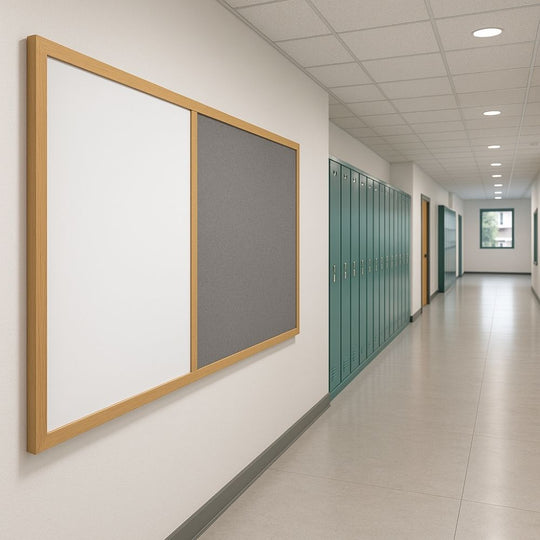
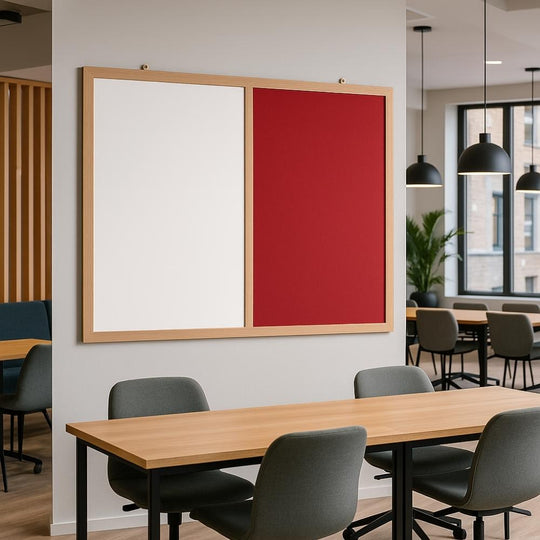
Non-Magnetic Whiteboards

Recently Viewed

UK's Trusted Display and Signage Supplier · Since 1978

Non-Magnetic Whiteboards:
Standard Dry-Wipe Boards

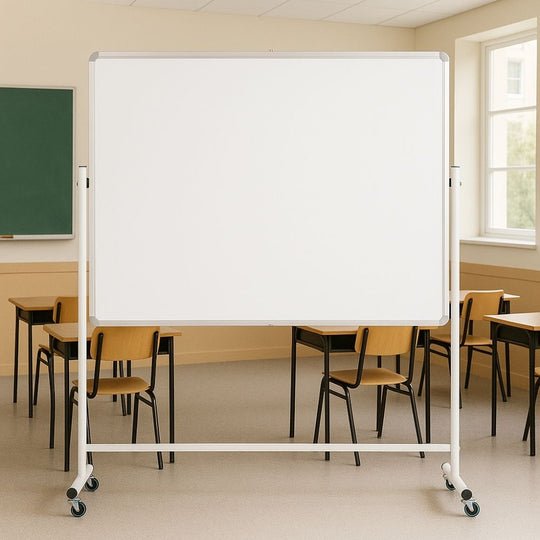
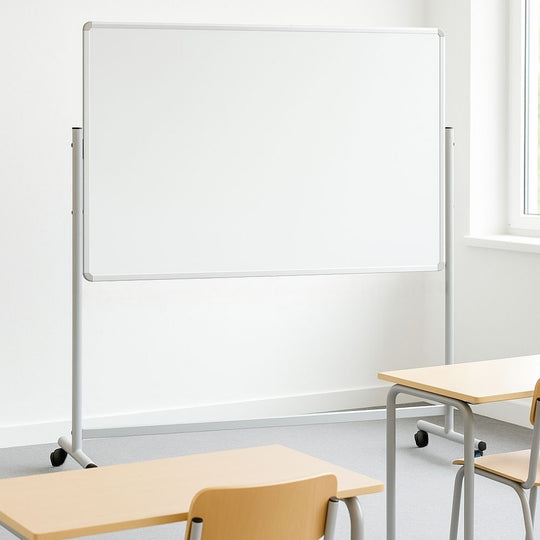
Non-magnetic whiteboards have a melamine or high-pressure laminate (HPL) dry-wipe surface on a lightweight non-steel backing. No magnets, no steel core: the board is significantly lighter and lower cost than a magnetic equivalent at the same size. Anodised aluminium frame with pen tray on wall-mounted models. Sizes from 900x600mm to 1800x1200mm plus A4 lapboards for classroom individual use. Weekly whiteboard spray cleaning required to prevent ghosting. Not suitable for projection: melamine surface is glossy and creates projector glare. Upgrade to magnetic whiteboard for document-attachment use. PO accepted from schools and NHS trusts on 30-day credit terms.

The decision between a magnetic and a non-magnetic whiteboard is straightforward: if you only need a writing surface for dry-wipe markers and erasing, a non-magnetic board delivers the same writing performance at a lower price and weight. If you need to attach printed documents, sticky notes, or visual aids with magnets, a magnetic steel-backed board is required. For a primary school classroom where 30 individual lapboards need to be ordered for pupil use, non-magnetic is the correct and cost-effective specification. For a boardroom where the whiteboard must display both hand-drawn content and printed reference documents simultaneously, magnetic is the correct specification.

Our non-magnetic whiteboard range includes wall-mounted melamine and HPL boards in standard sizes, wooden and aluminium framed options, and A4 individual lapboards in bulk packs for classroom use. For magnetic boards with steel backing see our magnetic whiteboards. For projection-compatible semi-matt surfaces see our whiteboards collection.

Light Weight
Dry-Wipe

Lower Cost Than Magnetic: When You Only Need to Write

A magnetic whiteboard requires a steel sheet backing bonded to the writing surface, which adds significant material cost and weight compared to a melamine or HPL laminate on a lightweight substrate. For applications where the only requirement is a dry-wipe writing surface, this steel cost is unnecessary. Non-magnetic boards provide identical writing performance to magnetic boards at the same surface quality: the difference is entirely in whether the board can hold magnets, not in how it writes or erases. For bulk classroom orders covering 30 or more boards, this cost difference is substantial per unit.

Lightweight for Partition Wall and Temporary Installation

Without a steel backing, a non-magnetic whiteboard at 1200x900mm weighs significantly less than the equivalent magnetic model. This has two practical consequences: the board is easier for one person to handle and install, and it can be mounted on plasterboard partition walls and lightweight office partition systems that could not support the load of a magnetic board at the same size without additional fixing into wall studs. For temporary training centres, rented offices, and portable classroom environments where wall fixing load is a constraint, non-magnetic is the appropriate specification.

Melamine vs HPL: Surface Durability Differences

Melamine is the standard entry-level dry-wipe surface: a resin-impregnated paper applied to a chipboard or MDF backing. It writes cleanly for light to medium use, but with intensive daily use over years it gradually degrades and becomes harder to erase fully. High-pressure laminate (HPL) has a harder, denser surface layer that resists the surface micro-scratching that causes ghosting on melamine boards over time, providing a longer usable life in medium to heavy use environments. HPL is the better long-term investment for permanent classroom and office positions; melamine is appropriate for patient room, occasional training, and position-of-need use where the writing frequency is lower.

A4 Lapboards for Individual Classroom Pupil Use

Our A4 individual lapboards are frameless non-magnetic dry-wipe boards sized for a single student to hold on their lap or place on their desk. Used in primary and secondary school classrooms for instant pupil response, quick-fire quiz answers, mental maths, handwriting practice, and any teaching activity where every pupil needs to simultaneously display a written response to the teacher without paper. Available in bulk packs for whole-class orders. The lapboard eliminates paper waste for repeated low-stakes writing tasks and allows the teacher to see all responses simultaneously from the front of the room.

Aluminium or Wood Frame: Two Aesthetic Options

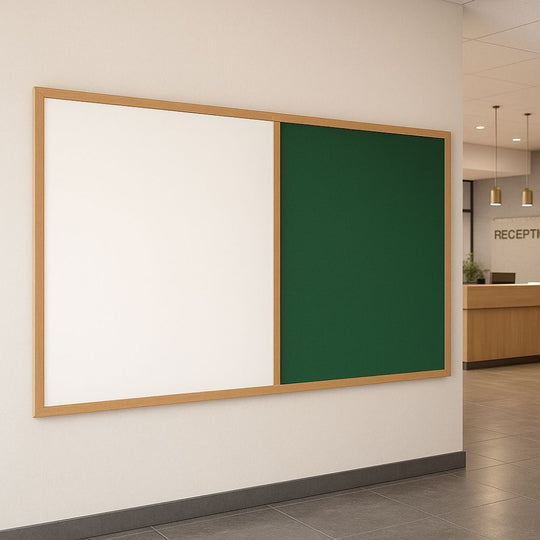
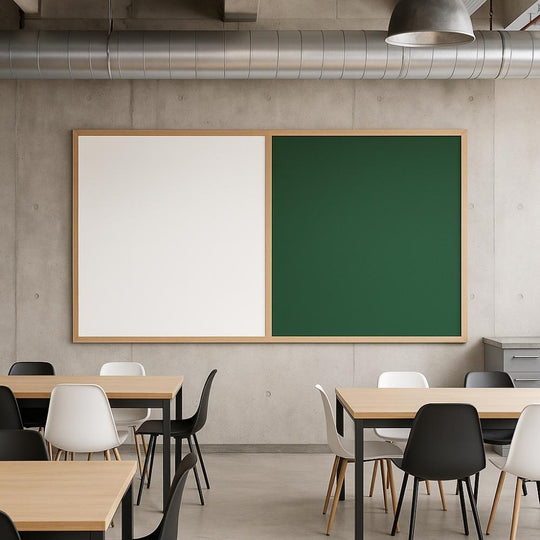
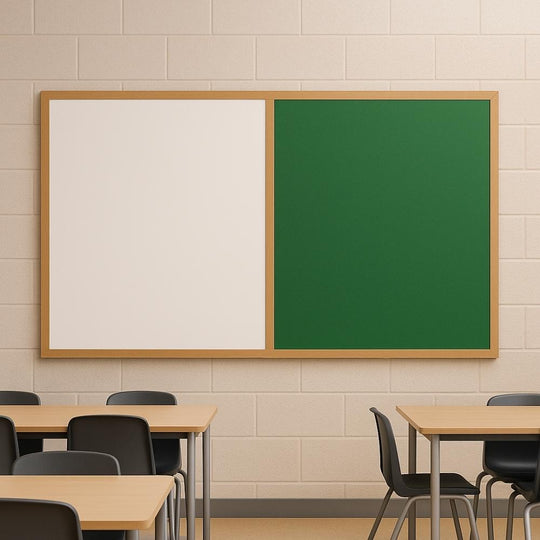
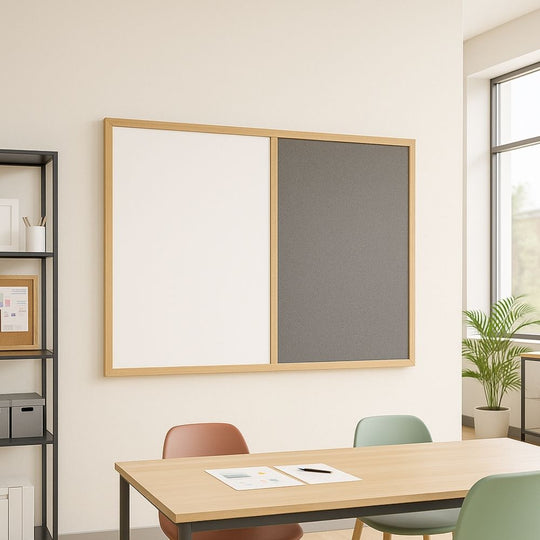
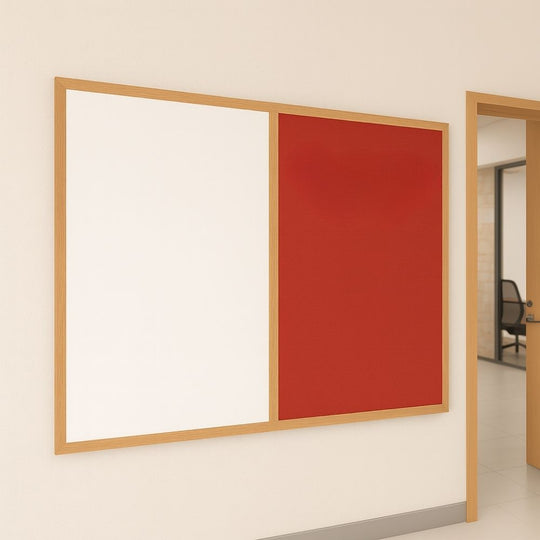
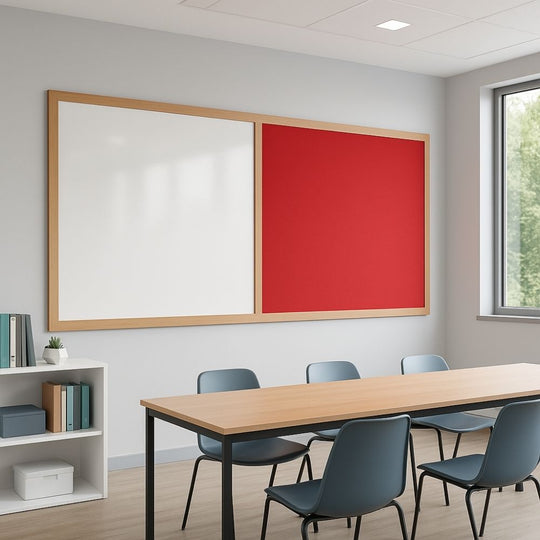
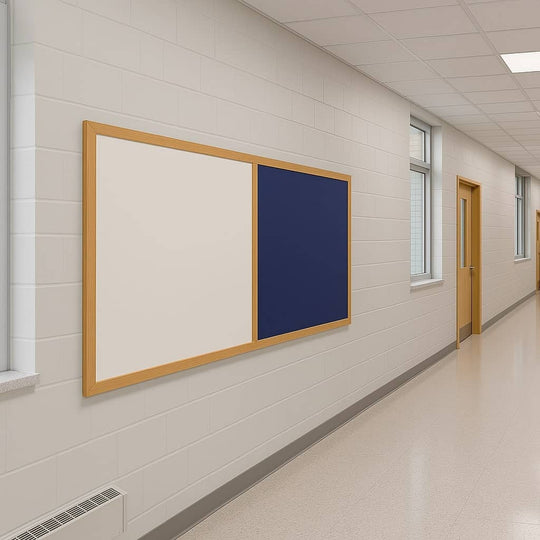
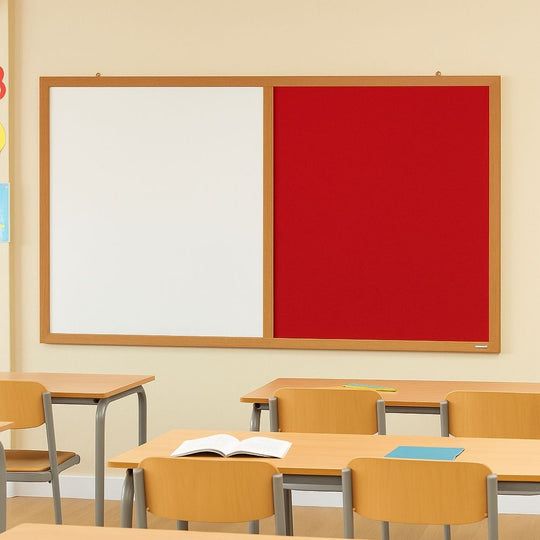
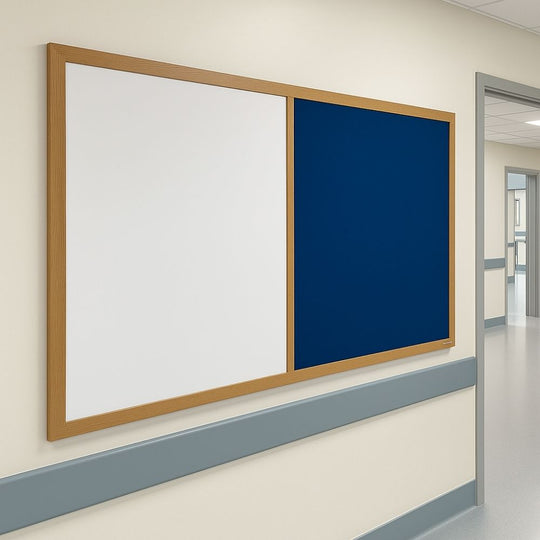
Anodised aluminium frames are the standard finish: durable, rust-proof, and professionally neutral in appearance for corporate and institutional environments. Wood-framed versions provide a warmer natural material appearance for offices, meeting rooms, and educational environments where the aluminium frame aesthetic does not suit the interior design. Both frame types use the same concealed corner fixing system with clip-on screw covers for a clean wall installation. Both include a clip-on pen tray at the bottom edge for markers and an eraser.

Standard Sizes from 900x600mm to 1800x1200mm

Our wall-mounted range covers 900x600mm for patient room and desk-adjacent positions, 1200x900mm for standard meeting room and smaller classroom positions, and 1800x1200mm for main teaching positions and large meeting rooms where full visibility from the back of the room is required. Portrait or landscape orientation is possible with the same board and fixing kit. All sizes include the fixing screws, plugs, and corner cover caps for a complete clean installation. Pen tray is included and clips to the bottom edge without additional fixings.

Writing Only, Document Attachment, or Projection?

Non-magnetic is the correct choice when the only requirement is a dry-wipe writing surface. Magnetic is required when printed documents, sticky notes, or visual aids need to attach to the board surface with magnets alongside handwritten content. Projection-compatible is required when a projector will project onto the board surface: standard melamine is glossy and creates severe projector glare that makes the projected image illegible; a semi-matt surface is needed for dual write-and-project use.

For Primary School Classrooms and Bulk Orders

Non-magnetic melamine boards suit classroom wall positions and individual A4 lapboard use. For wall-mounted classroom boards where the teacher also needs to attach printed resources and flashcards with magnets, upgrade to a magnetic board. Bulk packs of A4 lapboards are available for whole-class individual pupil use. PO accepted from schools, academies, and local authority educational supply orders on 30-day credit terms.

For NHS Patient Rooms and Ward Use

Small non-magnetic boards in patient rooms, physiotherapy rooms, and ward briefing spaces suit the low-frequency writing use of these positions where a magnetic steel-backed board is unnecessary cost and weight. For ward management information boards where staff attach printed rosters, forms, and reference materials with magnets alongside handwritten content, the magnetic board is the correct specification. Both are accepted on NHS purchase orders with 30-day credit terms.

For Meeting Rooms Where Projection Is Used

Standard melamine boards are glossy and create severe projector glare when a projector is aimed at the surface. If the whiteboard position will also serve as a projection screen, specify a semi-matt projection-compatible whiteboard surface from our whiteboards range. The semi-matt surface absorbs rather than reflects projector light, allowing both projection display and dry-wipe writing on the same surface without glare or marker damage to the projected image.

Value and Volume:
The Displaysense Advantage

Displaysense has supplied dry-wipe boards to schools, NHS trusts, corporate training centres, and offices across the UK for nearly 50 years. We understand that not every whiteboard position requires the full specification of a magnetic steel-backed board, and that the budget saved by specifying non-magnetic boards correctly can cover additional boards for positions that would otherwise go without. Our melamine and HPL boards are tested for consistent writing and erasing performance, supplied with everything required for a complete clean installation, and available for public sector purchase orders on 30-day credit terms.

For magnetic steel-backed boards see our magnetic whiteboards. For projection-compatible boards and the full range see our whiteboards collection. For freestanding options see our freestanding whiteboards.

Light
Weight Backing
A4 to
1800x1200mm
PO
Schools and NHS Welcome
45+
Years in Business
What is the difference between a non-magnetic and a magnetic whiteboard?
The only functional difference is whether the board can hold magnets. A magnetic whiteboard has a steel sheet bonded behind the writing surface: magnets grip this steel through the writing surface layer. A non-magnetic whiteboard has a lightweight substrate (chipboard, MDF, or foam core) behind the writing surface that magnets do not grip. The writing and erasing performance of the two types is equivalent at the same surface quality (both can be melamine or HPL). The magnetic board is heavier, higher cost, and requires a structurally adequate wall fixing to support the additional weight. Choose non-magnetic when you only need to write and erase; choose magnetic when you also need to attach documents and visual aids with magnets.
What is the difference between melamine and HPL whiteboard surfaces?
Melamine is a resin-impregnated decorative paper bonded to the substrate under moderate heat and pressure. It provides a smooth dry-wipe surface for light to medium writing frequency. Over time with intensive daily use, the surface develops microscopic scratches from marker tips and eraser contact, which trap ink residue and cause ghosting (faint shadows of previous writing that do not erase cleanly). HPL (high-pressure laminate) is a harder, denser surface layer produced under higher pressure with a greater resin density, providing better resistance to the surface micro-scratching that causes ghosting. HPL maintains a cleaner erasable surface for longer in medium to heavy daily use environments. Melamine is appropriate for patient rooms, occasional training use, and any position where writing frequency is low; HPL suits permanent classroom and daily meeting room positions.
Why is my whiteboard ghosting and how do I prevent it?
Ghosting occurs when ink residue remains in microscopic scratches on the board surface after erasing, leaving visible shadow marks of previous writing. On a new board, ghosting does not occur because the surface is scratch-free. Over time, dry eraser contact gradually creates micro-scratches that trap ink. To prevent ghosting: clean the board weekly with a specialist whiteboard cleaning spray and a soft cloth rather than relying solely on dry erasing; always use quality dry-wipe markers rather than permanent markers on the dry-wipe surface; and never use rough or abrasive cloths that accelerate surface scratching. Once a board is significantly ghosted, deep cleaning with whiteboard restoration spray may partially recover the surface, but surface replacement is the long-term solution.
Can I use a non-magnetic whiteboard for projection?
Standard melamine surfaces are glossy and create severe projector glare when a projector is aimed at the board, making the projected image illegible from most viewing angles. Non-magnetic melamine whiteboards are not suitable as projection screens. If the whiteboard position must also serve as a projection surface, specify a projection-compatible whiteboard with a semi-matt surface that absorbs rather than reflects projector light. See our whiteboards range for semi-matt projection-compatible models. These boards can be written on with dry-wipe markers and erased in the same way as standard boards while also functioning as a projection screen without glare.
How do I clean a non-magnetic whiteboard correctly?
For daily use, wipe the board with a standard dry felt eraser immediately after use while the ink is still fresh. Ink that dries completely on the board surface is harder to erase cleanly and contributes to ghosting over time. For weekly maintenance, spray the board with a specialist whiteboard cleaning spray and wipe with a clean soft cloth, not a dry eraser. The cleaning spray contains solvents that dissolve the ink residue from surface scratches that dry erasing cannot reach. Do not use household glass cleaner or abrasive surface cleaners on a whiteboard: glass cleaner leaves a film that reduces marker adhesion, and abrasive cleaners accelerate surface scratching. If permanent marker is accidentally used on the board, trace over it immediately with a dry-wipe marker of the same colour, then erase both together before the dry-wipe marker dries.
Are A4 lapboards available in bulk for classroom orders?
Yes. Our A4 non-magnetic dry-wipe lapboards are available in bulk class packs specifically for school orders. A standard class pack covers a full class of 30 pupils. Lapboards are frameless, lightweight, and wipe clean with a dry cloth or felt eraser. They are used for simultaneous pupil response activities, mental maths, spelling practice, and any teaching activity where every pupil needs to show their answer to the teacher at the same time without using paper. PO accepted from schools and local authority educational supply orders. Volume discounts apply for orders covering multiple classrooms or multiple schools in a single consolidated purchase.
Do you accept Purchase Orders from schools and NHS trusts?
Yes. We accept official Purchase Orders from state schools, academies, colleges, universities, NHS trusts, local councils, and all public sector organisations on 30-day credit terms. Volume discounts apply for large quantity orders covering multiple boards for classroom fit-outs, ward installations, and training room supplies. Contact our team to set up a trade account for your organisation or to receive a consolidated quote for a fit-out order in a single purchase.

Shop Non-Magnetic Whiteboards

Designed in the UK. Built in our own factories worldwide. Delivered nationwide.

Browse Full Collection