


Best Lighting for Collectibles: Display Cabinet Lighting Guide

Best Lighting for Collectibles How to Showcase Your Collection
The single biggest upgrade you can make to a display cabinet. It is the difference between somewhere to keep a collection and somewhere to truly show it off. This guide covers everything worth knowing before you buy, from the types of light and the right colour and brightness to the features that matter and the mistakes to dodge.
Drag the handle to see the cabinet with its lighting off and on
Good lighting is the cheapest, fastest upgrade you can make to a display, and the difference between a cabinet that simply stores a collection and one that shows it off.
What Types of Display Lighting Are Available?
Most display lighting comes down to a few main approaches, and the best results often combine them. Hover over each one to switch its light on.

A dedicated LED for every shelf, so each level is lit evenly with nothing left in shadow. How most of our cabinets light up.

An even sheet of light along an edge. The workhorse, with no dark corners.

A focused beam for a hero piece. Highlight and shadow, for depth and theatre.

Light fed into the rim of a shelf so it glows from within. The premium trick.

An even glow behind the pieces. Gallery-like; silhouettes read instantly.

Light set into the base, washing upward so pieces seem to float. Dramatic for a single statement piece.
LED Strip Lights vs Spotlights, Which Should You Choose?
The two you will weigh up most are strip lights and spotlights. Here is where each one wins.

- An even, continuous wash across the whole shelf
- No dark corners on busy or layered displays
- Ideal for figures, models and anything detailed
- Easy to run the full width of a cabinet

- A focused beam that picks out a hero piece
- Highlight and shadow that add depth and drama
- Best for catching chrome, gloss and metal
- Perfect for a single standout item
Strips give even coverage and spotlights bring drama. The best cabinets give you a mix of both.
What Colour Temperature Is Best for Displaying Collectibles?
Colour temperature, measured in kelvin, sets the mood before anything else. Drag the slider to see how the colour of the light shifts from warm to cool.
For most collectibles, cooler daylight tends to win, because it makes saturated colours, chrome and crisp whites pop. Warmer light flatters wood tones and vintage pieces.
| Colour Temperature (Kelvin) | How the Light Looks | Best for Displaying |
|---|---|---|
| 2700K to 3000K | Warm white | Wood cabinets, vintage and warm metallic pieces |
| 3500K to 4100K | Neutral white | Mixed collections and true to life colour |
| 5000K to 5500K | Cool white | Chrome, whites, modern and sci-fi pieces |
| 6000K to 6500K | Daylight | Maximum pop and a gallery showcase feel |
What Features Should You Look for in Display Lighting?
Not all LED is equal. When you compare cabinets, look at the quality of the light itself, not just whether it has any.
What Is the Best Lighting for Different Types of Collectibles?
Different collections ask for slightly different light. Here is how to get the best from the most popular, with the right cabinet for each.

Posed figures live or die by their faces and detail. The cardinal sin is a single top light that throws their fronts into shadow. A glass cabinet with integrated LED on every shelf lights each figure evenly, front to back, so nothing hides in the dark.
- Integrated LED on every shelf for even, front-to-back light
- Neutral to cool white for true paint and costume colour
- A spotlight to make a hero figure stand out

Paintwork and metal come alive under light that creates reflections. This is where directional light earns its place.
- Directional spotlights to catch contours, chrome and gloss
- High colour accuracy so metallics and pearls read true
- Neutral to cool white for crisp, true bodywork colour

Signed shirts, balls and photos are often irreplaceable, and both ink and fabric fade. Show them off without speeding that up.
- Low-UV LED to protect autographs and printed shirts
- Even light across framed and free-standing pieces
- Keep it well away from direct sunlight

The crowd most worried about lighting, and rightly so. Get this right and you protect value as well as show it off.
- Low-UV LED is non-negotiable; keep cards away from direct sun
- Even, diffused light to kill glare on foils and graded slabs
- Neutral white for honest artwork; UV-filtering glass for the grails

Stones and polished metal only come alive when light hits them directly and bounces back. This is where bright, crisp light earns its keep.
- Bright, cool to daylight white to maximise sparkle and shine
- Spotlights and high colour accuracy so metals and gemstones read true
- Even fill so nothing sits flat or dull
| Type of Collectible | Best Colour Temperature (Kelvin) | Recommended Light Type | What to Watch Out For |
|---|---|---|---|
| Action figures | Neutral to cool white | Even wash and a spotlight | Shadowed faces and fronts |
| Model cars | Neutral to cool white, accurate colour | Directional spotlights | Flat, untrue metallics |
| Sports memorabilia | Neutral white, low UV | Even, diffused | Fading ink and fabric |
| Trading cards | Neutral white, low UV | Even, diffused | Glare and fading |
| Jewellery and watches | Cool to daylight, accurate colour | Spotlights | Dull, flat stones |
Can Display Lighting Damage Collectibles?
Properly chosen lighting will not. Museums, archives and serious collectors favour LED for exactly this reason, because it runs cool and gives off almost no ultraviolet light, so it is safe even for delicate pieces. The real threat is daylight.
Fading is driven by UV, and daylight is full of it. Keep a display out of direct sun, light it with low-UV LED, and you have removed the main threat. For the most valuable pieces, add UV-filtering glass on top, the same principle museums and galleries rely on to protect light-sensitive items.

Do You Need a Lit or Unlit Display Cabinet?
If your collection sits in a bright, well-lit room and you are happy relying on that, an unlit cabinet will do a job. But room light is uneven, it shifts through the day, and it rarely falls where you want it. A cabinet with its own lighting gives you control, with every shelf lit evenly, at the brightness you choose, whatever the room is doing. For anything you genuinely want to show off, lit wins.
Are Illuminated Display Cabinets Worth It?
For most collectors, yes. Integrated lighting is the single biggest upgrade to how a collection looks, and because it is built in there are no batteries to change, no wires to hide and no adhesive strips peeling away within a year. Set against the cost and faff of retrofitting lights into a cabinet that was never designed for them, a purpose-built lit cabinet looks better and lasts longer.
- ✕Visible cables and dangling battery packs
- ✕Uneven pools and bright hotspots
- ✕Batteries to recharge, adhesive that lifts
- ✕Top shelf lit, the rest in gloom
- ✓Wired out of sight, designed into the cabinet
- ✓Even across every shelf, top to bottom
- ✓Low-heat, low-UV LED, made to last
- ✓Looks like a gallery, not a project
What Features Should You Look for in a Display Cabinet?
The cabinet matters as much as the light. For collectibles, here is what matters most.
Common Display Lighting Mistakes to Avoid
A few mistakes turn up again and again. Steer clear of these and you are most of the way to a great display.
- One light at the top only. The lower shelves fall into shadow and pieces end up lit from behind. Light every shelf, not just the first.
- Glare on the glass. Bare, bright LEDs bounce straight back at you. Use diffused light, angle it inward, and keep the cabinet away from facing windows.
- The wrong colour temperature. Too warm and colours turn muddy. Neutral to cool white suits most collections.
- Too dim, or too harsh. Aim for even, balanced light that reveals detail without washing it out.
- Direct sunlight. The fastest way to fade a collection. Keep displays out of the sun, and add UV-filtering glass for valuables.
- Bodged battery strips. They pool, flicker and die within a year. Integrated LED looks better and lasts.
How Do Professional Collectors Display Valuable Collections?
Professionals tend to follow the same handful of principles, whether it is a museum, a gallery or a serious private collector. Valuable items go in an enclosed cabinet rather than on open shelves, under controlled, low-UV lighting, behind glass that filters daylight, on shelving that adjusts to fit each piece. The goal is always the same, maximum visibility with minimum risk to the collection.
For a home collection the same logic scales down neatly. An enclosed glass cabinet keeps dust and handling away from your pieces, integrated LED gives even, low-heat light on every shelf, and adjustable glass shelving lets you fit tall and short items without wasted space. It is the museum approach in a piece of furniture, and it is why most collectors end up choosing a lit, glass-fronted cabinet over an open display.
If you only remember three things, here they are.
- Use LED lighting with low UV output.
- Keep collections out of direct sunlight.
- Choose a cabinet with integrated lighting on every shelf.
Professional collectors and museums follow the same principles to protect and showcase valuable items.
Best Display Cabinets for Showcasing Collectibles
The cabinets that show a collection best share a simple recipe, integrated LED that lights every shelf evenly, toughened glass on all sides, a secure lock and adjustable shelves, in a finish that frames your pieces rather than competing with them. A black frame all but disappears, and lets the collection take the light.
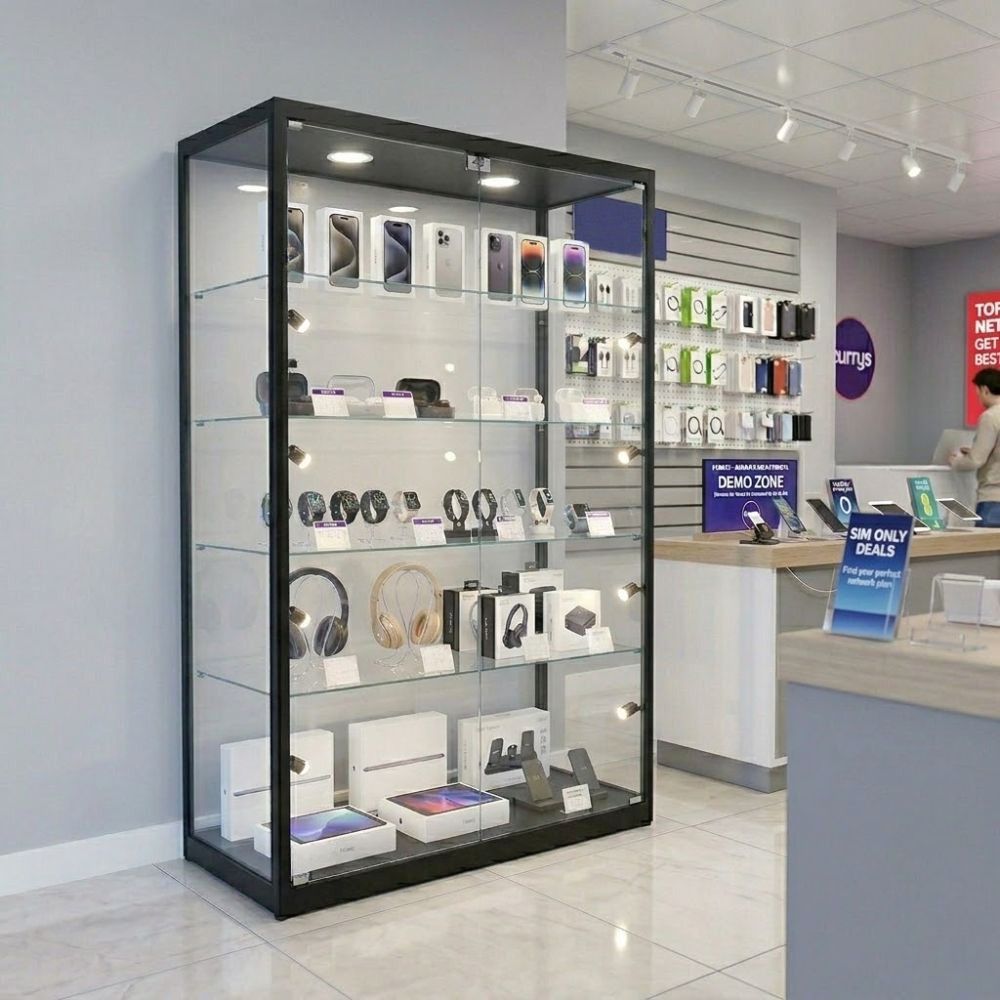
Our widest cabinet, with 10 integrated LED lights and adjustable glass shelves for larger collections.
View Cabinet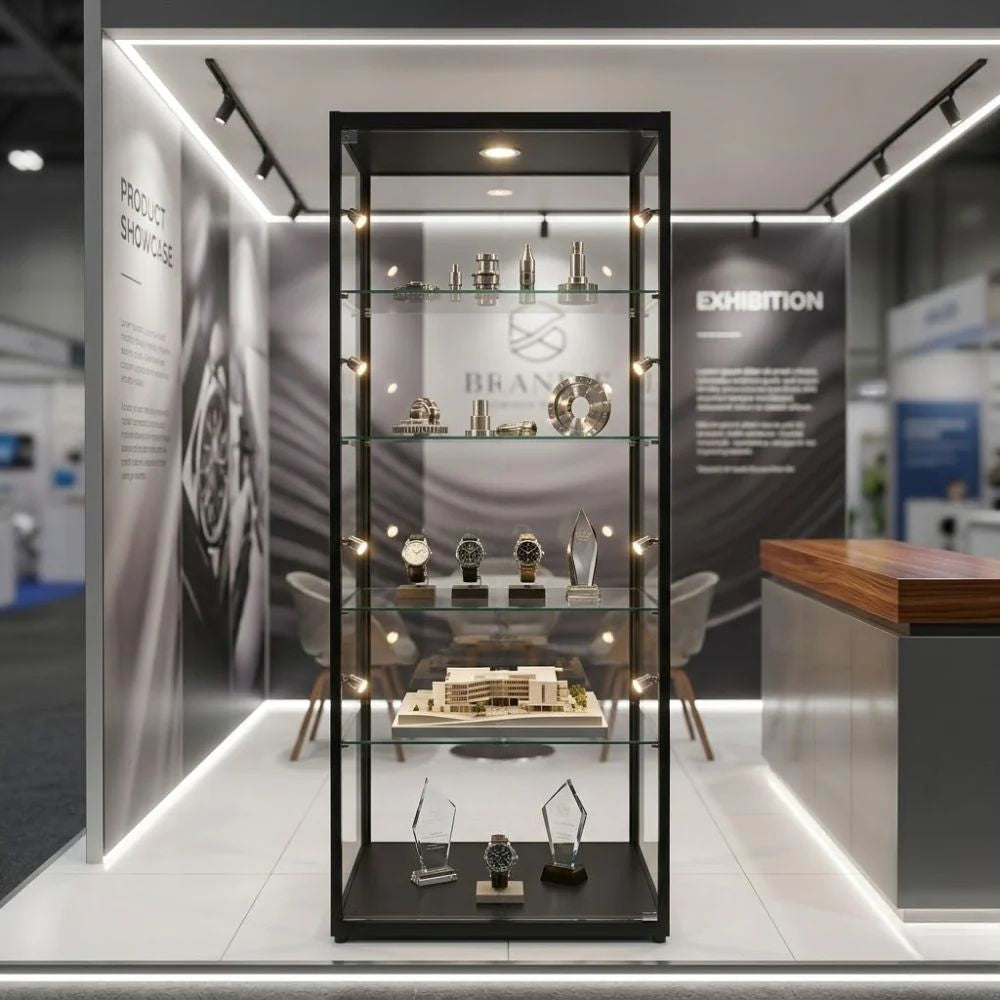
A compact black-framed cabinet with 10 LED lights, ideal for a focused display.
View Cabinet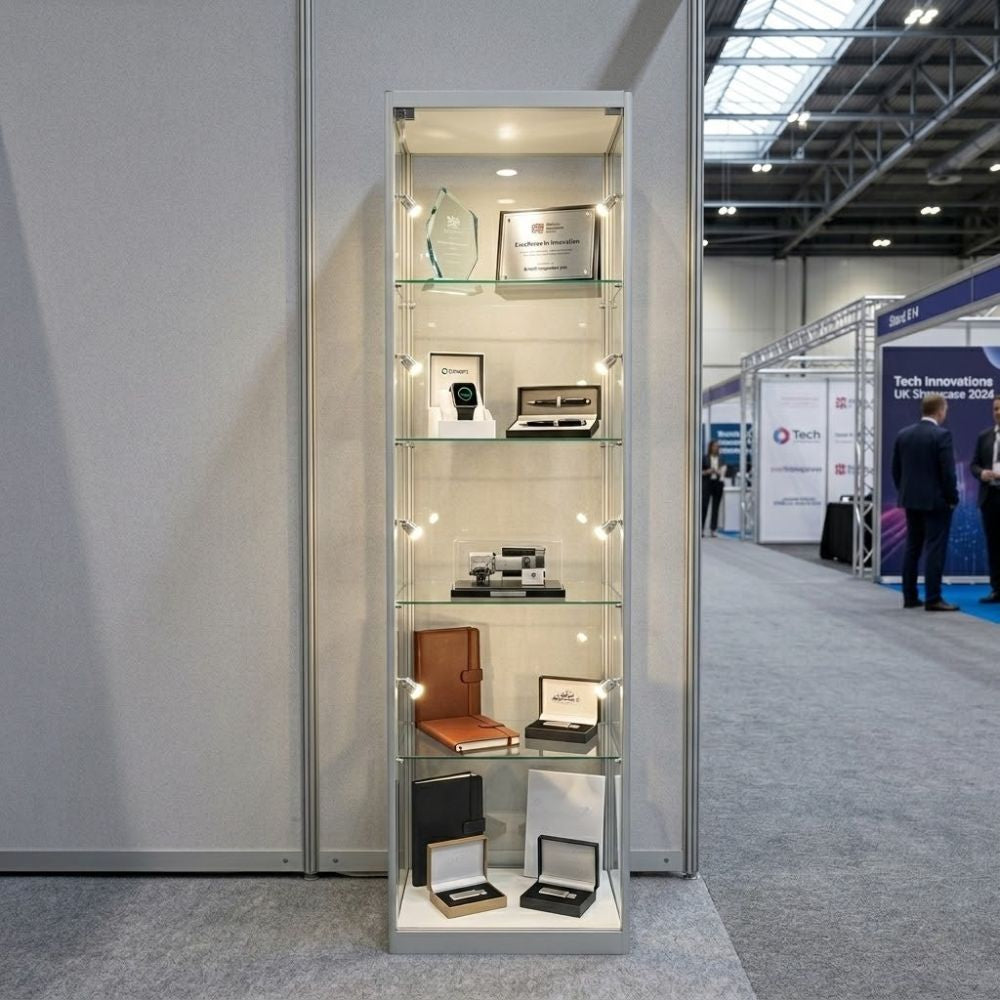
Slim silver-framed Stahldas cabinet with 10 LED lights, perfect for smaller spaces.
View CabinetFrom integrated LED and toughened glass to lockable doors and adjustable shelves, our display cabinets are built to show a collection at its best. Free UK delivery and next-day availability on stocked lines.
Good lighting is the cheapest way to make a collection look its best, and the wrong lighting can quietly undo it. The safest choice is LED, which runs cool, gives off almost no UV, and shows colours accurately. Cool to neutral white suits most collectibles, with warmer light flattering wood and vintage pieces. Whatever you display, light every shelf evenly so nothing sits in shadow, keep it out of direct sunlight to prevent fading, and choose a cabinet with integrated lighting rather than adding it afterwards. Get those few things right and any collection looks brighter, truer and better protected.
Frequently Asked Questions
What Is the Best Way to Display Collectibles at Home?
What Is the Best Display Cabinet for Collectibles?
Are Glass Display Cabinets Better for Showcasing Collectibles?
Do Illuminated Display Cabinets Make Collectibles Look Better?
What Should I Look for When Choosing a Display Cabinet for Collectibles?
What Is the Best Lighting for Action Figures?
How Do Museums Light Valuable Collections?
Is It Better to Buy a Display Cabinet with Built-In Lighting?
How Do I Stop the Bottom Shelf of a Display Cabinet Being in Shadow?
Will the Lights in a Display Cabinet Fade My Collectibles?
Where Can I Buy a Lit Display Cabinet in the UK?

How to weigh up size, glass, shelving and lighting to pick the cabinet that suits your collection.

Keeping pieces safe from dust, sunlight and handling, so a collection still looks its best years from now.

Styling tips and room ideas for turning a display cabinet into a feature your visitors notice.

