


School Display Cabinets: Which Type Should You Choose?

Choose a school trophy cabinet by measuring your tallest cup first, then working out how much of it the space will take. Everything else follows from those two numbers. This guide covers sizing, shelf loading, locking, LED lighting, where to put the cabinet, how to look after it, what it costs, and a checklist to run before you raise the order.
A trophy cabinet is bought once and lived with for fifteen years. Get the shelf height wrong and next season's cup will not fit in it, and the cabinet becomes a cupboard nobody looks at.
What Size Trophy Cabinet Does a School Need?
Start with your tallest trophy and add clearance to lift it in and out, then check what the space allows. Full-height freestanding cabinets are typically 1800mm high in widths from around 400mm up to 1200mm, so a 400mm unit fits a pier between two doors while a 1200mm unit anchors a foyer wall. Wall mounted cabinets are shallower and shorter, which is what makes them work on a corridor.
If you are still weighing a dedicated trophy cabinet against a general display case, our school display cabinet buying guide covers the differences and when each one makes sense. If the question is whether you need a cabinet at all, our display cabinets vs noticeboards guide compares it against a board.
| Where the trophy cabinet is going | Typical cabinet to choose | The measurement that decides it |
|---|---|---|
| Sports hall entrance or main hall | Full height, 1800mm, 1000mm to 1200mm wide, LED lit | Wall width, since this is the statement display |
| Reception or foyer | Full height, or wall mounted where the floor must stay clear | Floor space left after the visitor queue |
| Corridor | Wall mounted, shallow depth, lockable | Depth, because the escape route has to stay clear |
| Narrow pier between doors | Full height but slim, around 400mm wide | Width of the pier, measured at the skirting |
Two narrower cabinets often beat one wide one. You can theme each of them, put them where the wall actually allows, and add a third later without the display looking half empty in the meantime.
How Much Weight Can Trophy Cabinet Shelves Hold?
Less than most people assume, and silverware is heavier than it looks. As a reference point, the adjustable tempered glass shelves across the Displaysense cabinet range are rated at around 12kg each as an evenly spread load, so confirm the figure for the model you are looking at rather than guessing from the size of it.
Do not line every heavy cup up on one shelf because they look good together. Distribute the weight down the cabinet and put the heaviest pieces lowest.
The rating is per shelf, not per cabinet, and it assumes the weight is spread rather than concentrated in the middle of the glass.
Schools add to trophy displays every year. Buy for what the cabinet will hold in five years, not for what is in the box today.
Adjustable glass shelves let you set tall bays for cups and shields and close bays for medals, and reset them when the collection changes.

Should a School Trophy Cabinet Be Lockable?
Yes. A trophy cabinet holds the most portable, most recognisable and most sentimental objects in the building, usually in the busiest part of it. Integrated cylinder locks recessed into the frame are the norm, and they are harder to defeat than a padlock while keeping the cabinet looking like part of the building.
Silverware is often donated, engraved and irreplaceable. A lock is what separates a display from an honesty shelf in a corridor of several hundred pupils.
A lock only works if somebody is responsible for opening it. Without a named keyholder the display gets sealed for years and stops being worth looking at.
Does a School Trophy Cabinet Need LED Lighting?
Lighting is what makes a trophy cabinet look like a trophy cabinet rather than a glass box. Silver and glass only read as silver and glass when something is catching them, and an unlit cabinet in a corridor with overhead strip lighting shows the reflection of the corridor instead of the contents.
That is the reason they are used, since heat is what damages certificates, ribbons, photographs and older engraved pieces in a closed case.
Integrated spotlights pick out the shine on cups and shields. Cabinets in the Displaysense range carry anything from six spotlights to ten LEDs depending on the model.
Keep the cabinet out of direct sunlight, because UV fades ribbons, certificates and printed photographs over a school year, and a bright window behind you is all you will see.


Where Is the Best Place for a School Trophy Cabinet?
The best place is wherever people naturally pause rather than simply pass through. Receptions, sports hall entrances and assembly halls all give someone a reason to stand still, and a few seconds of standing still is what turns a cabinet into something that actually gets read. A display on a route people stride down is furniture.
Recognition also only counts if it is seen. The Department for Education's Behaviour in schools guidance makes the wider point that a school's culture and values show themselves through what everyone in it does, and that positive behaviour should be acknowledged consistently rather than only corrected. A trophy cabinet is one of the few permanent, public places a school does that.
Match the audience to the display as well. A reception cabinet is read by visitors and prospective parents, while a sports hall cabinet is read by the pupils trying to make the team. Those are different people who want different things from the glass.
A cabinet in a corridor sits on an escape route. Your fire risk assessor has the final say on what can go there, and your health and safety lead on fixings, which need to suit masonry, plasterboard or a partition. Get both to sign off the position before you order. Which boards are allowed on the same corridor is covered in our fire resistant noticeboards guide.
How Do You Maintain a School Trophy Cabinet?
Barely any of it is hard, but almost none of it happens without a named keyholder. Six things keep a trophy display looking like it is cared for.
- Spray the cloth, not the cabinet. Use a soft cloth and a non-abrasive glass cleaner, and spray onto the cloth so nothing runs down into the frame or onto the certificates inside.
- Dust the silverware off the shelf. Take pieces out to clean them rather than working around them, which is how things get knocked over and chipped.
- Check the fixings once a year. Put it on the same schedule as your other estate checks. Full-height units should still be secure, and wall fixings should still be sound.
- Re-check the shelf loading as the collection grows. A shelf that was fine with four cups may not be fine with nine.
- Rotate the display each term. Fewer pieces with space around them reads as a display. Forty pieces packed in reads as storage, and pupils walk past storage.
- Keep an eye on fading. If ribbons or certificates are going pale, the cabinet is getting too much daylight and needs moving or screening.
How Much Does a School Trophy Cabinet Cost?
Four things drive the price. Size, whether the unit is wall mounted or full height, whether the lighting is integrated, and whether there is a lockable storage base underneath. A compact wall mounted cabinet is the lowest-cost route into a properly glazed, lockable, lit display. A full-height unit with LED lighting and a storage base sits at the top, because you are paying for the frame, the glass area, the lighting and a second cabinet below.
Prices change, so check the current figure on the product page rather than trusting a guide. Displaysense accepts official purchase orders from state funded schools, academies, multi-academy trusts and colleges on 30-day credit terms, subject to account approval, and volume discounts apply from two units upward, which is worth a call if you are fitting out a hall and a corridor at the same time.
What Should You Check Before Buying a Trophy Cabinet?
Run this list before the order goes in. Most of the problems schools hit later are visible on this list now.
Which Trophy Cabinets Do We Recommend for Schools?
These three cover the positions schools ask about most, which are a hall or foyer centrepiece, a narrow pier, and a corridor where the floor has to stay clear.
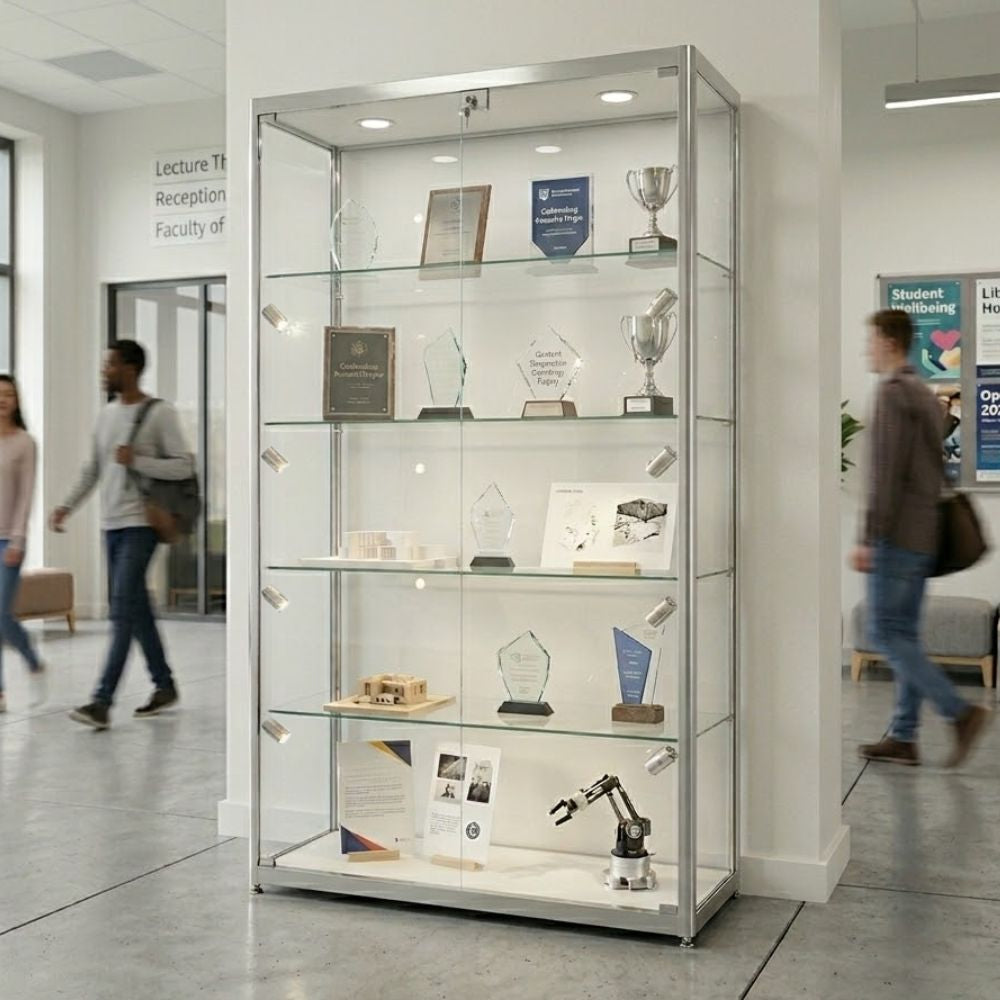
Best for a hall or foyer centrepiece. Full-height lit display with a lockable storage base for the pieces that are out of rotation.
View Cabinet
Best for a narrow pier. Full height at only 400mm wide, with four adjustable shelves for medals and smaller silverware.
View Cabinet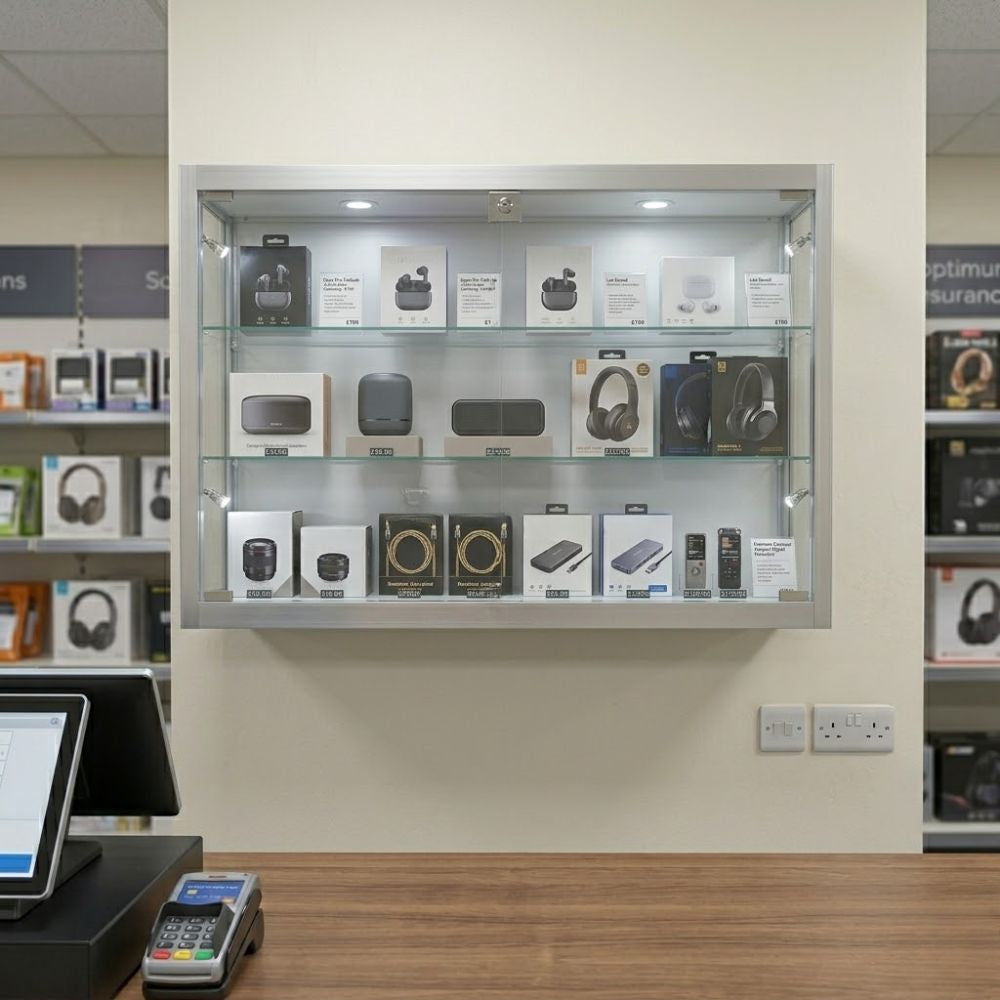
Best for a corridor. Lockable and lit at 250mm deep and 22kg, so the silverware is on show and the route stays clear.
View CabinetBrowse the full trophy cabinet range, or widen the search to display cabinets, free standing display cabinets, wall display cabinets and locking display cabinets. For the wider school range, see education display and storage and the education hub.
What Do School Trophy Cabinets Look Like in Practice?
A look at how schools have positioned and filled their trophy displays.

A full-height lit cabinet at a sports hall entrance, with shelves set tall for cups and shields and the names and years shown alongside them.

A lit, lockable cabinet in a school reception, holding the awards visitors and prospective parents see while they wait.

A shallow wall mounted unit in a busy corridor, keeping silverware on show without narrowing the escape route.

A cabinet given over to house standings, with a bay per house so the display works as a scoreboard through the year.

A 400mm wide full-height unit fitted between two classroom doors, proving a trophy display does not need a whole wall.
Displaysense supplies lockable, LED lit and wall mounted glass trophy cabinets to UK schools, with fire test certification on selected cabinets, free UK mainland delivery, and purchase orders on 30-day credit terms.
Size a school trophy cabinet from your tallest cup and the space it has to live in. Full-height units are typically 1800mm high in widths from around 400mm to 1200mm, and wall mounted units suit corridors where the floor must stay clear. Check the shelf loading rather than guessing it, specify toughened glass, lock the cabinet and name a keyholder, and use cool running LED lighting while keeping the case out of direct sunlight. Get the position signed off by your fire risk assessor, measure the route in as well as the wall, and rotate the display each term so it stays worth looking at.
Frequently Asked Questions
What size trophy cabinet does a school need?
How much weight can a trophy cabinet shelf hold?
Should a school trophy cabinet be lockable?
Does a trophy cabinet need LED lighting?
Where should a school trophy cabinet go?
How do you clean a glass trophy cabinet?
Are trophy cabinets made with safety glass?
Where can I buy a school trophy cabinet?
Glass specification refers to toughened safety glass made to BS EN 12150. The principle that glazing people may collide with should break safely, resist impact or be protected and marked comes from Approved Document K (2013 edition, England), which applies to glazing forming part of a building rather than to cabinets themselves. Fire performance refers only to those Displaysense display cabinets that have been tested to BS 5852:2006, Section 12, Ignition Sources 0, 1 and 5, and not to the whole range; the test report and certification is available to download and fire tested status should be confirmed on the individual product page. The point about school culture and acknowledging positive behaviour is from the Department for Education's Behaviour in schools guidance (non-statutory advice for England), which concerns behaviour and culture rather than displays or cabinets. Dimensions, weights and shelf loading figures are from current product pages and can change, so confirm before ordering.

Types, sizing, safety glass, locking and lighting, with a decision tool.

Reception, trophies, art, STEM, history, libraries, music and open evenings.

Which to use for trophies, pupil work, safeguarding and events, use case by use case.

